Less is sometimes more

Economic logic says: MORE! More features! More functions! More buttons! More value! Pile it on until the thing collapses under the weight of its own brilliance.
Psycholology says: nah. Less is more. And psycholology wins.

The Man Who Made People Look Weird on Trains
Akio Morita came from a Japanese family that had been slinging soy and miso sauce since the mid-1600s. Proper old-school. Then, in 1946, he and his business buddy Masaru Ibuka founded what would eventually become Sony. They kicked off with magnetic tape recorders, then made the first pocket radio fully made of transistors. But Morita's crown jewel of genius? The Sony Walkman—the great-great-granddaddy of the iPod.
Now, if you were born this century, you're probably thinking, "So what? People wear headphones everywhere. It's basically a personality trait." Fair. But in the late 1970s, strolling around in public with headphones on was deeply weird. It was up there with whipping out a giant brick of an early cellphone in the late '80s—a move guaranteed to make strangers point and snigger.
Market research on the Walkman was a bloodbath. Barely any interest, lots of hostility. "Why on EARTH would I want to walk around with music playing in my head?" was the standard response. Morita ignored it completely. The whole idea had actually come from the 70-year-old Ibuka, who just wanted a small gadget so he could listen to full-length operas on flights between Tokyo and the US. Perfectly reasonable request.
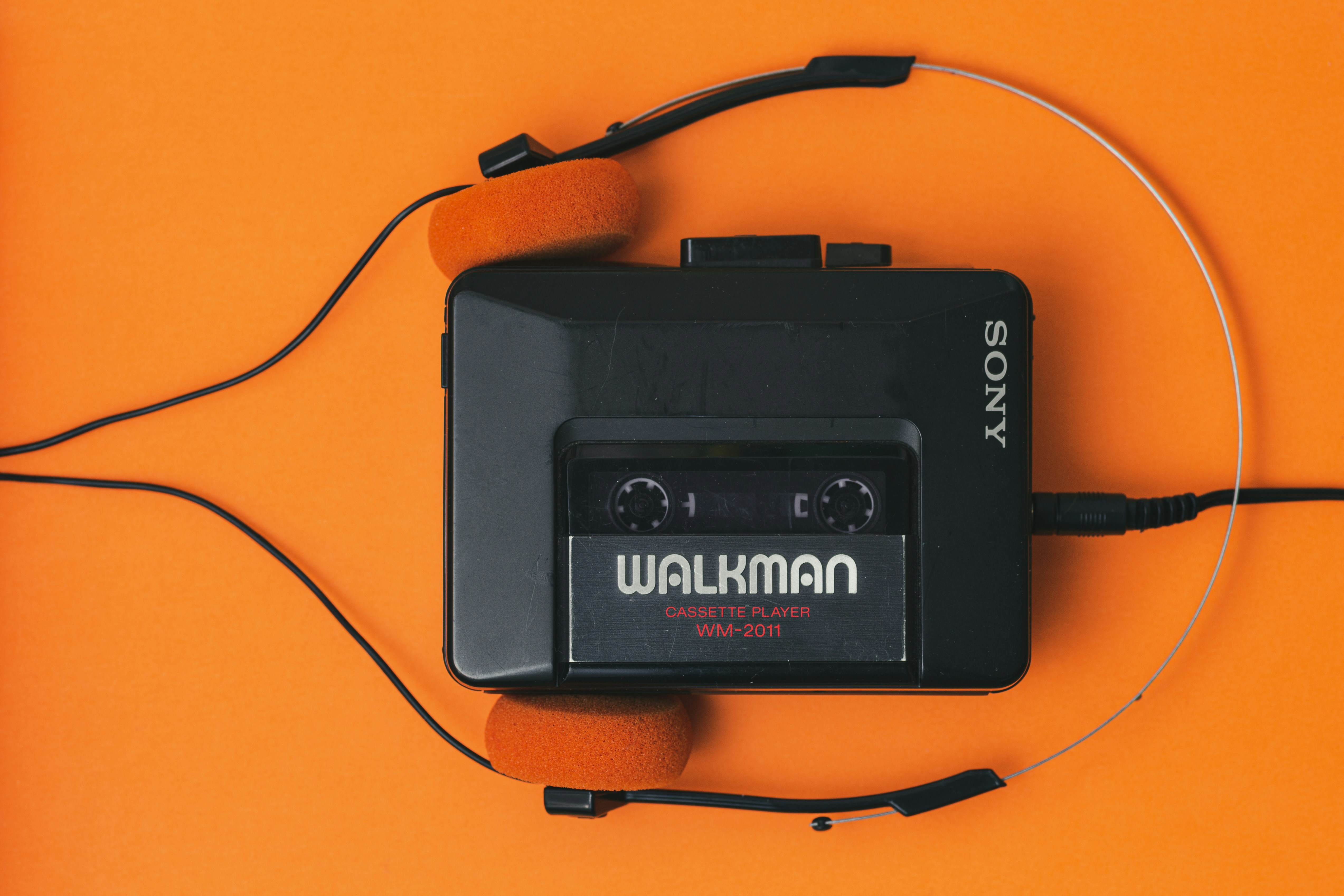
The Recording Button That Had to Die
When the engineers came back, they were absolutely chuffed. Not only had they built the miniature stereo cassette player Morita asked for—they'd also squeezed in a recording function! Cue proud engineer faces.
Then Morita told them to rip it out.
I imagine the silence was deafening. The technology would've added maybe a few dollars to the final price given mass production. Why on earth would you NOT include this brilliant bonus feature? Any "rational" person would've patted the engineers on the back and said, "Splendid work, chaps!" But Morita vetoed the recording button. Multiple accounts confirm it.
This defies all conventional economic logic. It does not, however, defy psychology.
Morita reckoned a recording function would muddle people about what the device was actually FOR. Was it for dictation? Recording your vinyl collection? Taping live gigs? In the same way McDonald's cunningly omits cutlery from its restaurants—so you're left in absolutely no doubt how to eat a hamburger - Sony stripped the recording function out of the Walkman. The result? A product with fewer functions but infinitely more power to change human behavior. By narrowing it down to ONE use, it clarified what the thing was for.
Once you grasp this, you start to see why Morita was right. You can always bolt extra functions onto something. But while that makes the thing more versatile, it also blurs its purpose—making it less pleasurable to use and, quite possibly, harder to justify buying.
The Annoying "But Where's the Evidence?" Brigade
Those of a scientific bent will fairly point out: there's no hard evidence that removing the recording function was a good idea. There's no parallel universe where a multi-function Walkman launched and immediately face-planted. It's also true that recording was added to later Walkmans — but only after everyone already understood what the device was for.
All I've got is a recurring pattern. And here's the thing: it is surprisingly common for blockbuster innovations to come from REMOVING stuff, not adding it.
Google, bluntly, is Yahoo without all the extraneous fluff cluttering up the search page. Yahoo, in its day, was AOL without in-built internet access. In each case, the winner conquered the world by subtracting, not adding.
More? Twitter's entire reason for existing was that arbitrary character limit. Uber originally didn't let you pre-book cars. The Week takes the world's newspapers and makes them digestible by removing a load of extraneous content. McDonald's deleted 99% of the traditional American diner menu. Starbucks barely bothered with food for its first decade and just focused on coffee. Budget airlines competed on what in-flight comforts you didn't get.
If you want to offer ease of use — and ease of purchase — don't hand people a Swiss Army knife that claims to do everything. With the notable exception of the mobile phone, we generally find it far easier to buy things that do ONE thing.

Why Engineers Hate This Idea
The engineering mentality — as at Sony — runs completely counter to all this. Removing functionality seems utterly illogical. And it is extremely hard to argue for overriding conventional logic in any business or government setting, unless you happen to be the chairman, chief executive, or minister in charge. You might think people instinctively want to make the best possible decision. But there's a stronger force animating business decision-making: the desperate desire not to get blamed or fired. And the best insurance against blame? Use conventional logic in every single decision. Always.
"No one ever got fired for buying IBM" was never an official slogan — but when it caught on among corporate IT buyers, commentators called it "the most valuable marketing mantra in existence." The strongest marketing approach in business-to-business isn't explaining that your product is good. It's sowing fear, uncertainty, and doubt around all the alternatives.
The desire to make good decisions and the urge not to get fired or blamed might look like the same motivation. They're not. In fact, they're often diametrically opposite. And that, dear reader, is why the Walkman had no recording button — and why it changed the world anyway.